I Tried Every Dental Solution for My 14-Year-Old Cat. 4 Made Things Worse.
by
Laura Bennett
Published on
If your senior cat has started to breathe like something is quietly rotting inside her mouth — and your vet just used the word "anesthesia" — you already know the particular kind of dread I'm talking about.
You've Googled at 2AM. You've tried to brush her teeth and lost. You've sat in the parking lot after the vet visit staring at an estimate that reads like a second mortgage.
And underneath all of it, the question you can't stop asking yourself: Is she in pain right now? And am I running out of time to do something about it?
I know. Because I lived this with my cat Maple for the better part of a year.
Maple is 14 years old. She has Stage 2 kidney disease. Last spring, her vet looked in her mouth, went quiet for a moment, and told me her teeth were "a real concern" — and then, almost in the same breath, told me that putting her under general anesthesia with her kidneys the way they are would be "a significant risk."
So I was handed an impossible problem. Her mouth was slowly poisoning her health. And the only solution my clinic offered could kill her on the table.
I spent the next nine months and $3,400+ testing every option I could find. Brushing. Dental treats. An "anesthesia-free" cleaning clinic. Competitor water additives. And then — finally — something that made Maple's vet go very quiet at her last checkup. This time, quiet in a good way.
Here's everything I tried, ranked from worst to best.
9 mo. | $3,400+ | 5 | 1 |
|---|---|---|---|
of testing | spent | solutions tested | actually worked |
Dental surgery with extractions | $1,200–$2,500 | High complication risk in cats with kidney or cardiac conditions |
#5 Daily Toothbrushing
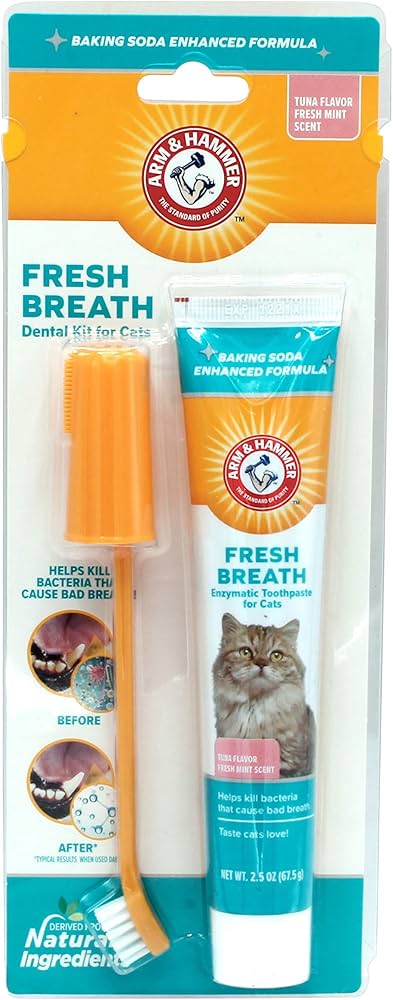
The recommendation that started this whole nightmare.
"Just brush her teeth daily," the vet tech said, handing me a finger brush and a tube of poultry-flavored paste with a cheerful smile. I went home feeling like a responsible cat mom.
What happened next is probably familiar to you.
The moment that brush came within two inches of Maple's face, she became something I cannot fully describe using family-friendly language. Four sets of claws extended simultaneously. She produced a sound I genuinely didn't know she was capable of making. I needed a bandage. She disappeared under the bed.
When she finally came out, she wouldn't look at me. Not for the rest of the evening. The animal I had been trying to protect now viewed me as a threat.
"The anxiety of being a cat mom is unparalleled. I have to trick her and violate her trust by trapping her."
I later learned I was not alone in this failure. Compliance with daily cat toothbrushing sits at roughly 2% — not because cat owners are irresponsible, but because it is a physical impossibility that ends in scratches, bites, and a shattered bond with an animal who cannot understand that you are trying to help her.
For a senior cat already navigating the stress of a compromised immune system, forced physical restraint isn't a minor inconvenience. Cortisol spikes. The heart works harder. And the creature who used to curl into the crook of your neck now flinches when you reach for her.
You don't just lose the dental battle. You lose her trust. And for a senior cat in her final years, that bond is not a luxury — it is her quality of life.
The bottom line: Toothbrushing is the "gold standard" of feline dental care in the same way that telling someone to "just relax" is the gold standard for anxiety. Technically correct. Biologically impossible. And for a senior cat, potentially more damaging to her remaining years than the dental disease it was meant to prevent.
#4 Dental Treats & Chews
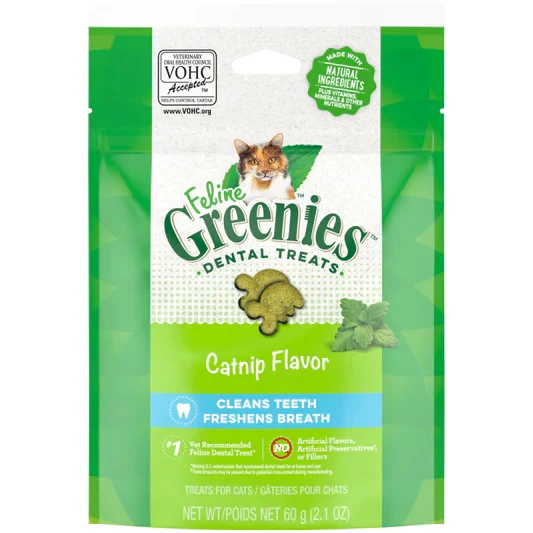
After the toothbrush disaster, I turned to the path of least resistance. Dental treats. No restraint. No wrestling. Maple would eat them voluntarily, they'd mechanically scrub her teeth, and we'd both move on with our lives.
She ate them enthusiastically. Her breath remained a biological hazard.
Here's what I didn't understand at the time. Dental treats are designed to graze the visible crown surfaces of the teeth — the hard outer enamel above the gumline. The contact time is measured in milliseconds. The pressure is negligible. And the bacterial colonies that are actually destroying a cat's mouth don't live on the crown.
They live underneath it.
Up to 60% of feline dental disease occurs below the gumline — in the pockets between tooth and soft tissue where no treat, no chew, and no finger brush can reach. This is where oral bacteria form in dense, layered biofilms. And this is where the real damage happens — not just to the mouth, but to the entire body.
For a cat already managing kidney disease, this matters enormously. Oral bacteria — particularly a species called Porphyromonas gingivalis — don't stay in the mouth. They enter the bloodstream through inflamed gum tissue and travel to the kidneys, the liver, and the heart, where they trigger systemic inflammation and accelerate organ deterioration. Research published in the Journal of the American Veterinary Medical Association found that cats with Stage 3 or 4 periodontal disease carry the highest risk of developing chronic kidney disease.
Maple wasn't eating dental treats. I was buying myself the feeling of doing something while the actual disease progressed, uninterrupted, toward her kidneys.
The bottom line: Dental treats are a $15 monthly guilt tax that contact the one part of the tooth that needs help least. For a senior cat with systemic vulnerabilities, they don't just fail — they provide a false sense of security that costs precious months of disease progression.
#3 "Anesthesia-Free" Professional Cleaning
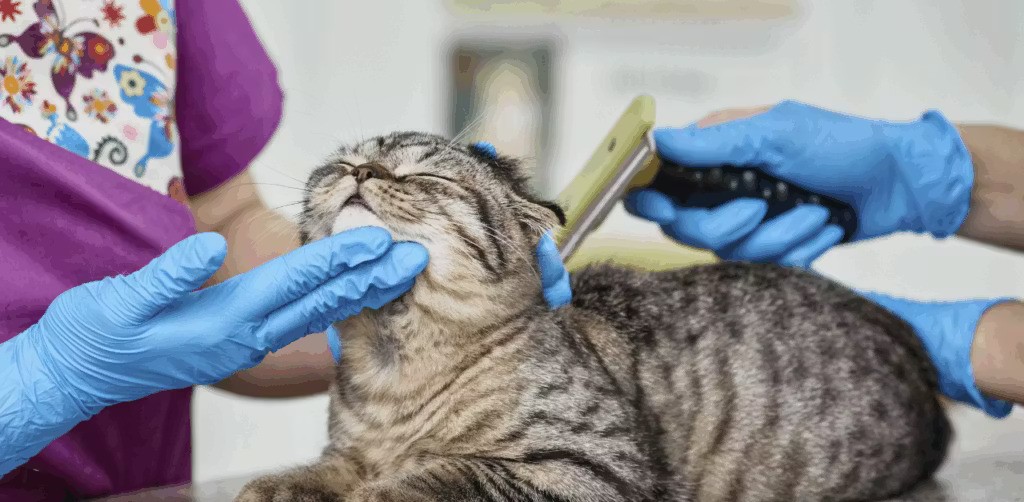
I found a wellness clinic offering this service for $280 per session, and I genuinely felt like I had solved my problem. No anesthesia. No surgical risk. Professional tools. Someone who did this every day.
I booked Maple in. I sat in the waiting room for forty-five minutes feeling, for the first time in months, like a competent cat mother.
Then I went home and read the actual veterinary literature on the procedure.
Veterinary dental specialists are precise on this point: anesthesia-free cleanings are cosmetic procedures. Without sedation, a practitioner can only safely access the crown of a conscious, defensive, uncooperative cat. The cleaning is rushed, incomplete, and superficial by necessity — because a 14-year-old cat with strong opinions about strangers touching her face will not hold still for subgingival probing.
Worse, the scraping motion on crown surfaces without proper subgingival debridement can fracture the surface layer of existing biofilm — dislodging bacteria into the bloodstream without removing the underlying colony. You pay $280 to potentially seed more bacteria into your cat's kidneys while the source infection continues completely untouched.
"My cat's age and severe asthma make extraction surgery too risky — but anesthesia-free cleaning left her worse than before."
And for a senior cat who finds strangers existentially threatening, the procedure itself carries real physiological costs. Maple came home from her session visibly shaken. Her pupils stayed dilated for hours. She barely touched her food. The acute stress response in a cat with compromised kidneys is not a small thing.
The $280 cleaned the visible surface of six teeth. The infection underneath — the infection actually connected to her kidney function — was completely, surgically untouched.
The bottom line: Anesthesia-free dental cleaning is the most predatory service in the senior cat market. It targets the exact fear it claims to solve — taking money from owners too terrified to risk surgery — then performs a cosmetic scrape that provides zero clinical benefit while the real disease accelerates unimpeded. For a senior cat with systemic disease, it may actively make things worse.
#2 Veterinary Dental Surgery Under General Anesthesia
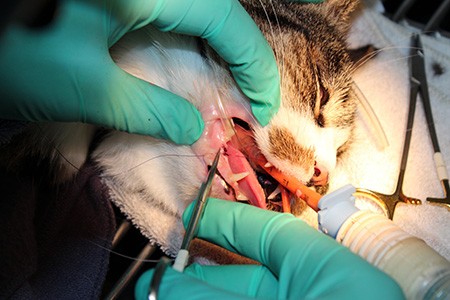
I want to be honest about this one, because I almost went through with it.
After the dental treats failed and the anesthesia-free cleaning left Maple stressed and no better, I went back to the vet. I asked them to run me through the full dental surgery option — what it would involve, what it would cost, and what the risks were for a 14-year-old cat with Stage 2 kidney disease.
The pre-surgical bloodwork. The heart ultrasound to check for silent murmurs. The dental scaling and any extractions. The post-op recovery care. The full picture.
The estimate came to just under $4,200.
I sat in my car for twenty minutes before I could drive home.
Procedure Component | Estimated Cost | Risk / Friction |
|---|---|---|
Senior blood panel | $300–$600 | Necessary — but doesn't guarantee surgical safety |
Heart ultrasound | $500–$800 | Checks for silent cardiac murmurs common in senior cats |
Dental surgery with extractions | $1,200–$2,500 | High complication risk in cats with kidney or cardiac conditions |
Post-op ICU care (if crash) | $1,000–$7,000+ | Required if the cat goes into distress coming off anesthesia |
But it wasn't the number that stopped me. It was the Reddit thread I found at midnight the week before I was going to book the appointment.
A woman had taken her 15-year-old cat in for what the clinic called a "routine dental cleaning." Her cat never came home. The veterinarian's explanation was that she "crashed the moment she was taken off anesthesia." The woman wrote that she never forgave herself for dropping her off.
"Age is not a disease, but death is a permanent side effect of the vet's 'routine' surgery." — TheCatSite.com forum
The clinical reality is this: while veterinarians often use the phrase "age is not a disease" to justify recommending surgery on older cats, the medical literature is clear that older cats — and especially cats with concurrent kidney or cardiac conditions — face meaningfully elevated risk under general anesthesia. The kidneys process anesthetic agents. When they are already compromised, that processing is slower, less complete, and harder to predict.
The same veterinary community that profits from $1,200 dental surgeries pays lip service to prevention while the industry's revenue model is, in purely economic terms, dependent on the failure of home care. A bottle of something that actually prevents dental disease doesn't generate a surgical package. It generates nothing.
I was not willing to put Maple on that table for a cleaning that, according to the research, addressed only the visible portion of her dental disease — leaving the subgingival infection that was seeding bacteria into her kidneys completely intact.
"I'm terrified to take her in. She's my whole world." — cat owner, r/Pets
The bottom line: For a young, healthy cat with no systemic conditions, surgical dental cleaning has genuine clinical value. For a senior cat with kidney disease, cardiac vulnerability, or any multi-systemic compromise, it is a high-stakes gamble that costs $2,000–$4,000+, addresses only the visible portion of the disease, and carries a real — if rarely discussed — risk of not bringing your cat home. It is not a routine procedure. It is the most expensive option that doesn't fix the root problem.
Every single one was treating the breath. None of them were treating the cause of the breath.
None of them asked: why is this bacterial infection so impossible to reach in the first place? Then I found a short video by a feline behavioral researcher — and what she said made my stomach drop. It made me realize why $3,400 and nine months of effort had changed absolutely nothing about what was happening inside Maple's mouth.
Here's what I learned.
The bacteria destroying a cat's mouth don't start as the hard, calcified tartar you can see on a tooth. They start as something almost entirely liquid. Dental plaque — at the stage where it can actually be disrupted — is approximately 90% water. It is a living bacterial biofilm suspended in a fluid matrix, clinging to tooth and gum surfaces, feeding and multiplying continuously.
Mechanical brushing — when it happens at all — touches this biofilm for perhaps thirty seconds, once a day, on the visible surfaces of a handful of teeth. Everything below the gumline, everything between teeth, everything on the back molars a cat will never allow you near: untouched. Completely untouched.
But here's what really stopped me cold: the reason competitor water additives — the ones I hadn't tried yet — kept failing wasn't that the concept was wrong. It was something far more specific to cat biology.
Cats possess what researchers call an "olfactory guard" — a hyper-refined sensory defense system evolved over millennia to detect contaminated water sources. A cat's sense of smell is estimated to be fourteen times more powerful than a human's. The Jacobson's organ, located in the roof of their mouth, acts as a secondary chemical detection system — sampling molecules in water and food that the nose alone might miss.
Every competitor water additive I researched contained either a scent-masking agent — mint, green tea, "fresh scent" compounds — or a chemical preservative like sodium benzoate that, while odorless to humans, registers as a distinct molecular signal to the feline Jacobson's organ.
When a cat detects that signal, she doesn't just dislike the water. Her evolutionary programming interprets it as a contamination warning. She stops drinking. And a senior cat with kidney disease who stops drinking is in immediate, serious danger — because hydration isn't a comfort issue for a cat whose kidneys are already struggling. It is survival.
What was needed wasn't just a water additive. It was a water additive that had been specifically engineered to be spectrally invisible — carrying zero chemical signature that a cat's olfactory system could detect, while still delivering the enzymatic activity needed to disrupt biofilm at the molecular level.
I found it. And it didn't come from a vet's office.
★ #1 — The Winner
The "One Drop a Day" Protocol a Feline Researcher Swears By
This video almost didn't get my click. The thumbnail looked too simple. I had been burned too many times.
But the researcher in it — a feline behavioral scientist who had spent years studying the evolutionary biology of cat hydration and oral health — finally explained the mechanism in a way that made everything else make sense retroactively.
She wasn't selling brushing. She wasn't selling surgery. She was describing a completely different framework for what feline oral care should look like — one built around the cat's biology rather than borrowed from dogs or adapted from human dentistry.
Specific enzymes — Glucose Oxidase and Lactoperoxidase — are naturally present in a cat's own saliva. Their function is to generate a low-level antibacterial environment in the mouth by producing hydrogen peroxide from the cat's own biological processes. They are, quite literally, the mouth's native defense system against oral bacteria. When that system is overwhelmed — as it is in most adult cats — the biofilm wins.
What she described was a formulation that delivers these identical enzymes through the water bowl — with zero synthetic stabilizers, zero preservatives, zero chemical odors — bypassing the feline olfactory guard entirely because there is nothing foreign to detect. The cat drinks normally. The enzymes enter the mouth. And for every hour of every day that the cat is hydrated, the biofilm matrix is being chemically disrupted before it can mineralize into the tartar that no water additive can address.
Not once a day if you remember to brush. Not for thirty seconds on the visible crowns. Continuously. Molecularly. In every sip.
I tried it with Maple the following week.
Day 1
Maple drank from her fountain exactly as she always had. No hesitation. No sniff and walk away. No behavior change whatsoever. I stood there waiting for her to reject it. She didn't.
Day 8
The smell I had been living with — the one I had privately started describing as "low-grade morgue" — was noticeably less. Not gone. But different. Lighter. I asked my husband to check without telling him why. He noticed immediately.
Day 21
Maple started asking to be picked up again. She had stopped doing this months earlier — I had assumed it was an age thing. The vet later suggested it may have been the chronic oral pain she had been silently managing. She pushed her face into my neck for the first time in almost a year.
6 Weeks
The vet appointment. Her vet examined Maple's mouth, paused, and said — and I am not embellishing this — "What are you doing differently?" She wanted to know specifically. She took notes. Maple's visible plaque had softened measurably. Her gum tissue showed reduced inflammation. Her breath was, in the vet's words, "dramatically improved."
Today
Maple is still 14. She still has kidney disease. None of that has changed. But her mouth is no longer a daily source of bacterial seeding into her kidneys. She is not in hidden oral pain. She is not a candidate for the surgery I spent nine months dreading. She is, by every measure available to me, more herself than she has been in years. I got her back.
No wrestling match. No shattered trust. No operating table. No $4,200 estimate sitting on my kitchen counter.
Just her fountain. One drop. Every day.
The researcher explains everything in a short, free video — the science behind why the olfactory guard causes water rejection, why biofilm is the actual target, and why continuous enzymatic saturation is the only mechanism that addresses feline oral disease on a timeline that matters for a senior cat.
I wish I had found it nine months and $3,400 ago.
What We Recommend
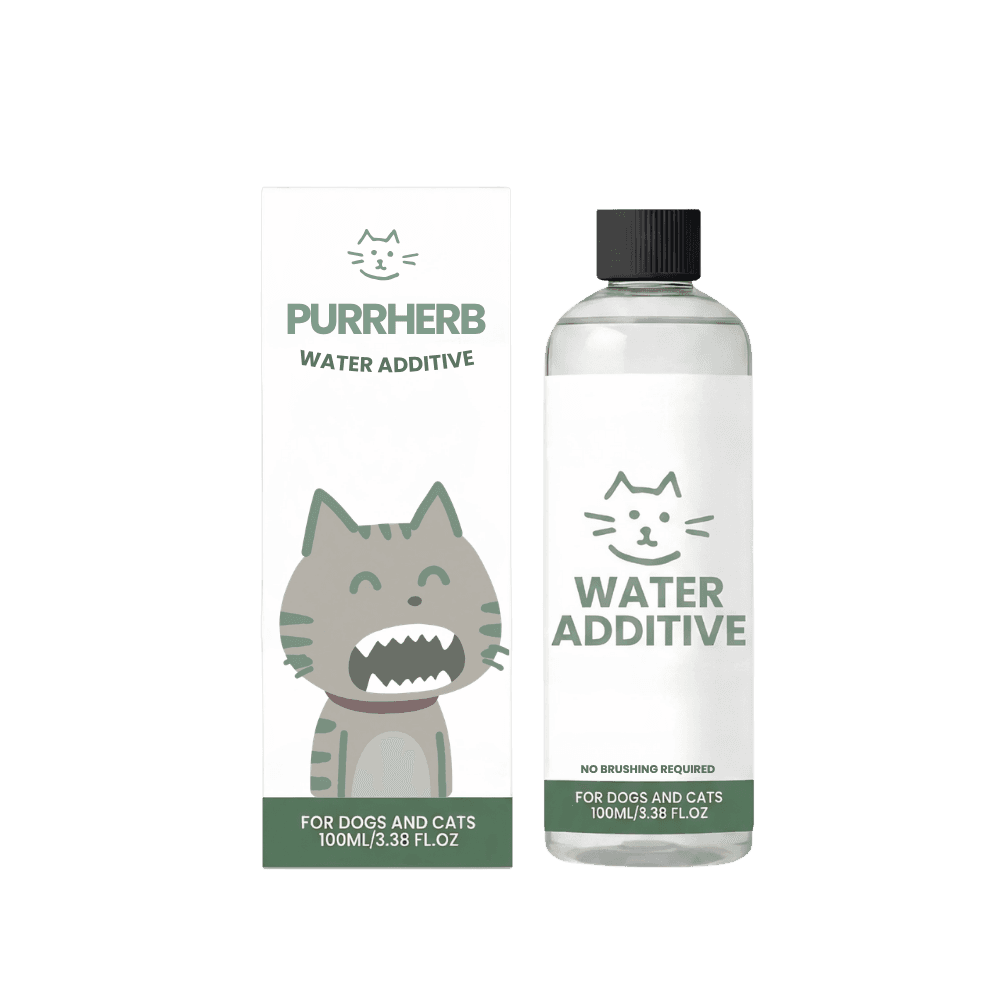
Purrherb Dental Water
Everything in this article points to one formulation requirement: an additive the Jacobson's organ cannot detect, delivering enzymes that work with the cat's own biology to stop biofilm from reaching the organs.
Purrherb was built specifically around that requirement. No synthetic preservatives. No sodium benzoate. No stabilizers that leave a chemical signature in the water. Just an enzymatic delivery system that uses your cat's own saliva as a catalyst, working continuously with every sip.
For senior cats already managing kidney disease, this matters beyond dental health. Every day that oral bacteria circulate unchecked is another day of systemic exposure. Purrherb does not reverse existing damage. But it stops the daily accumulation that drives it forward.
One teaspoon per day. That's the full protocol.