I Tried Everything for My Old Cat's Teeth.
4 Things Made It Worse.
→ One Thing Might Give Her More Time.
I spent 9 months and $3,400 trying to fix my cat's teeth. Here's the only thing that actually helped.
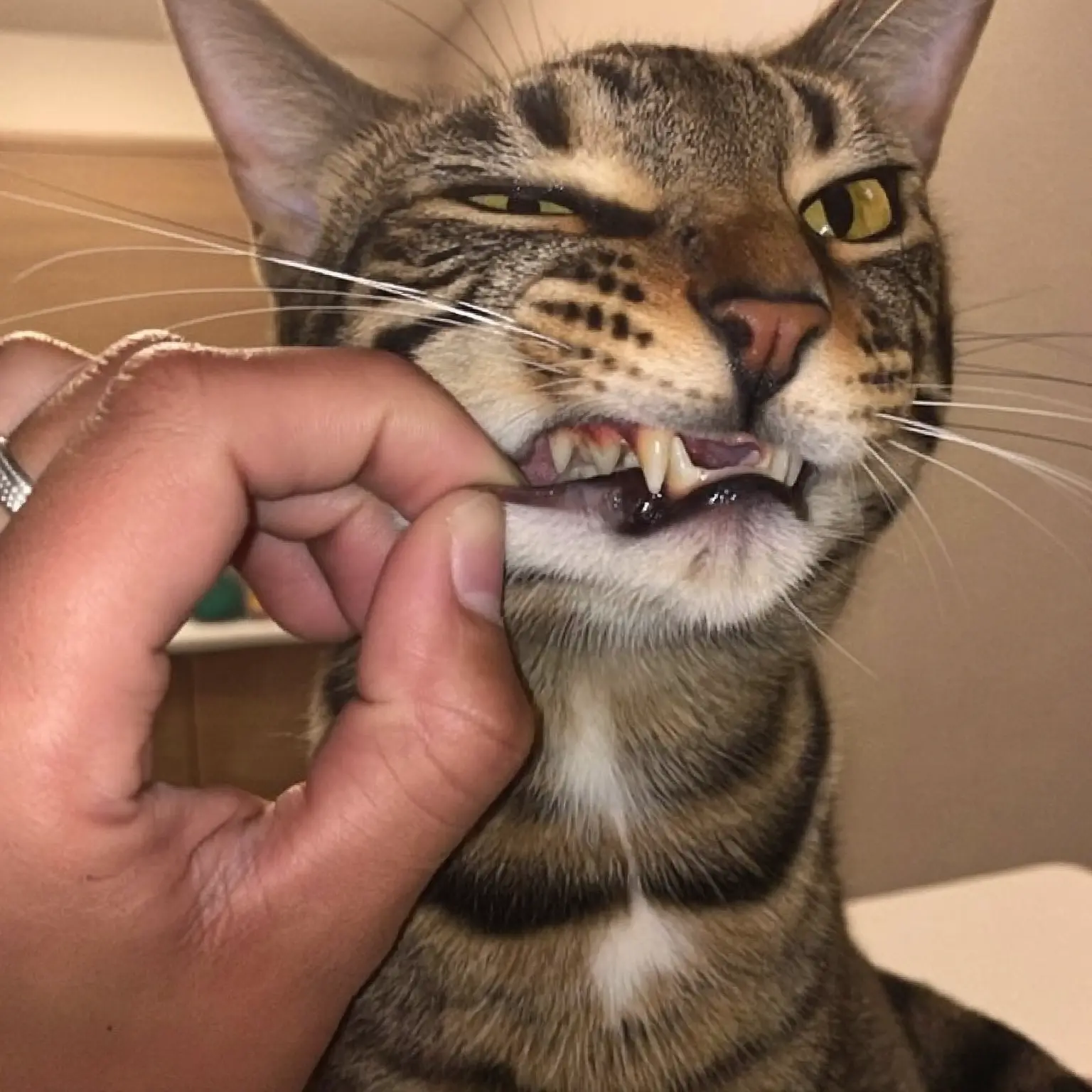 Before
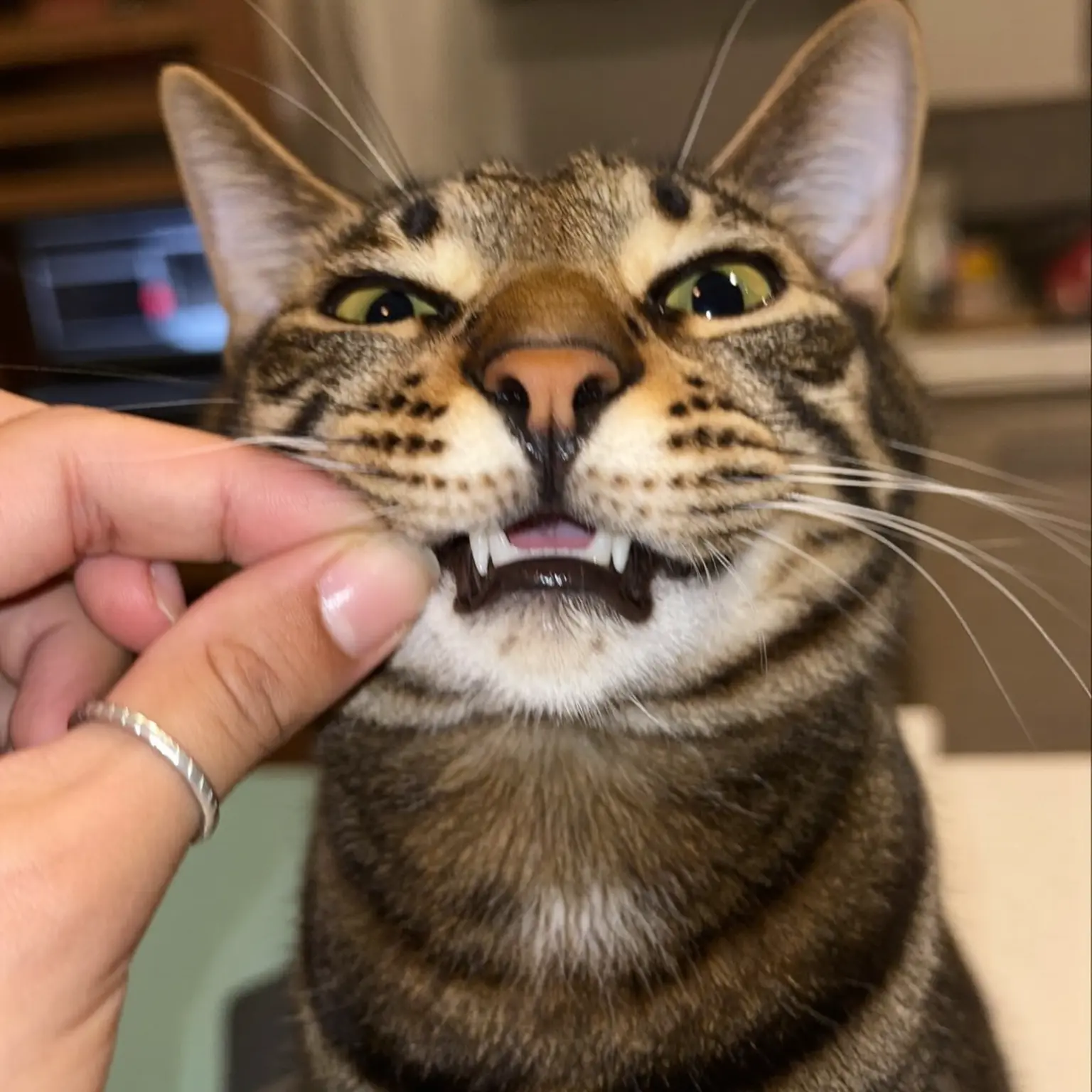 After
After
Maple, 6 weeks apart. Same cat. Same window seat. Same light.
Maple is 14 years old. She has kidney disease. Last spring, my vet looked in her mouth and said her teeth were a real problem, but surgery was too risky with her kidneys the way they are.
Her mouth was slowly hurting the rest of her body. And the only fix my vet could offer might kill her.
I spent nine months testing every option I could find. Here's what I learned, from worst to best.
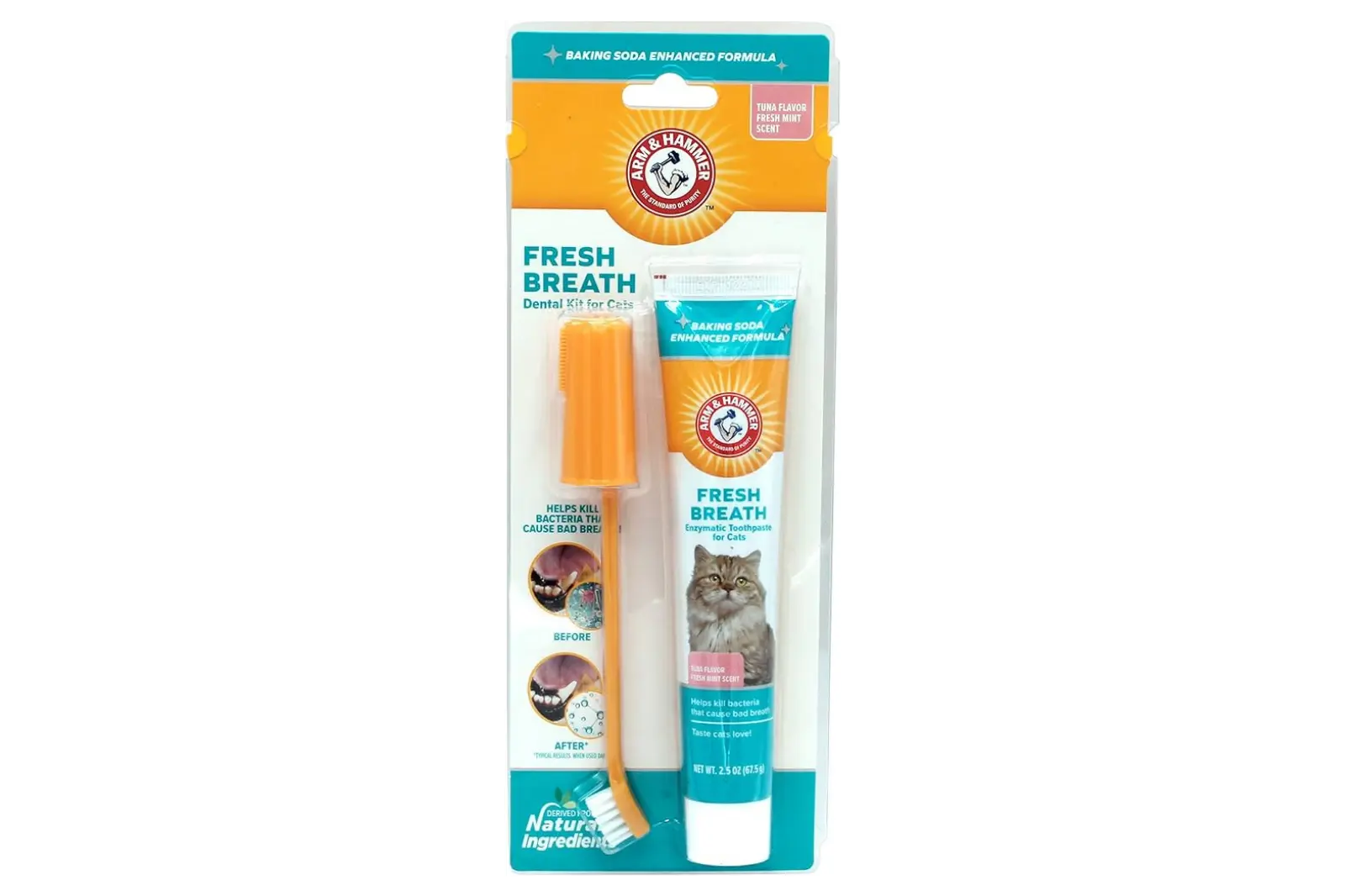
"Just brush her teeth every day," the vet said. I went home feeling hopeful.
The second that brush touched Maple's lip, she went wild. Four sets of claws. Three bandages. Six hours hiding under the bed.
Only 2% of cat owners can actually brush their cat's teeth, not because they don't care, but because most cats simply won't let them. For an older cat, being held down raises stress hormones that hurt the heart.
Good idea, impossible to do. The stress it causes can hurt your cat more than the bad teeth.
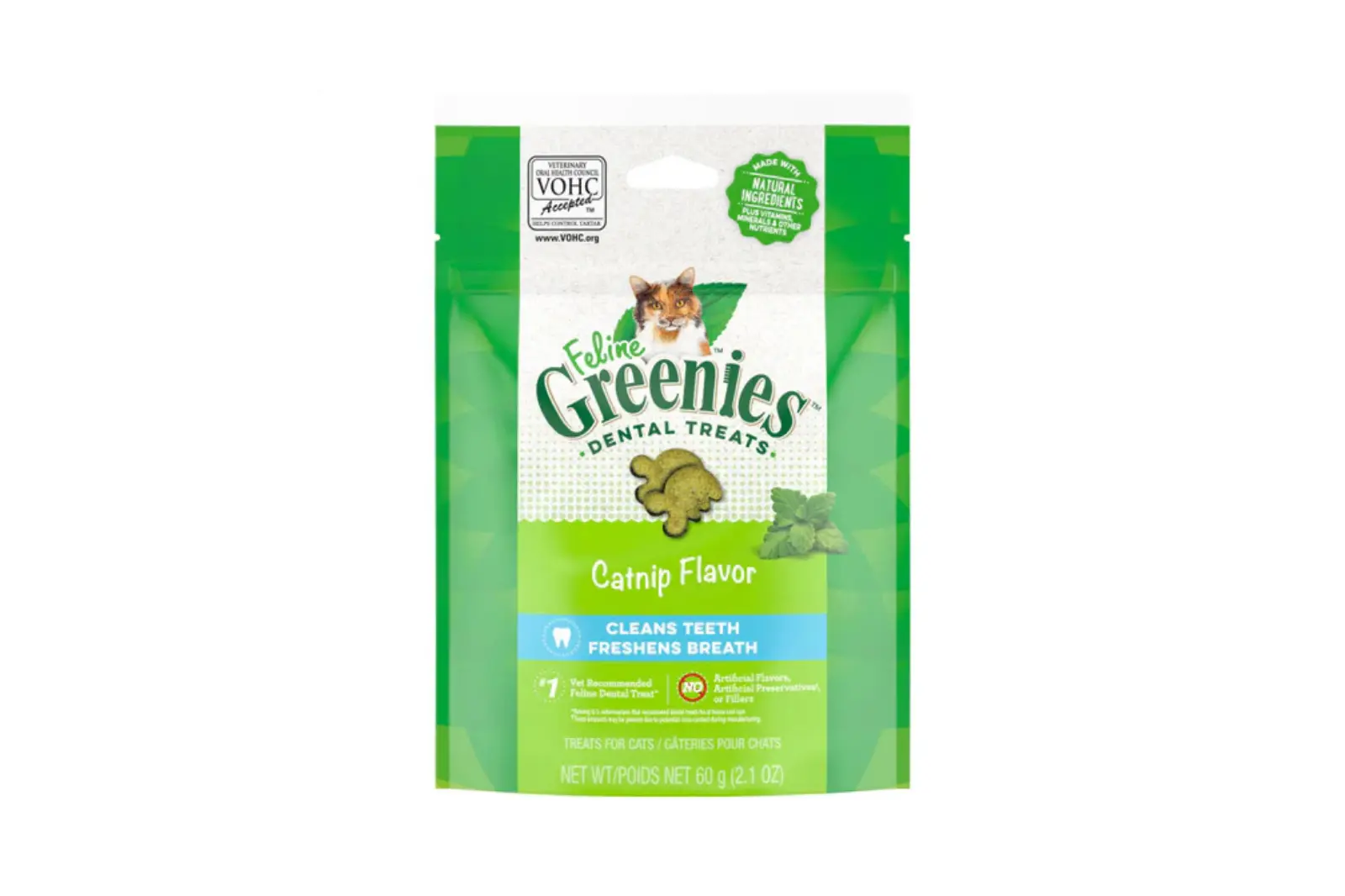
Maple loved eating them. Her breath still smelled awful.
Treats only clean the top part of the tooth you can see. But 60% of cat dental disease hides under the gumline, where no treat can reach. That's where bacteria grow and travel to the kidneys, liver, and heart. For a cat with kidney disease, every day that infection sits untreated makes things worse.
A $15 waste that only cleans the part of the tooth that needs help least. It makes you feel better without fixing the real problem.
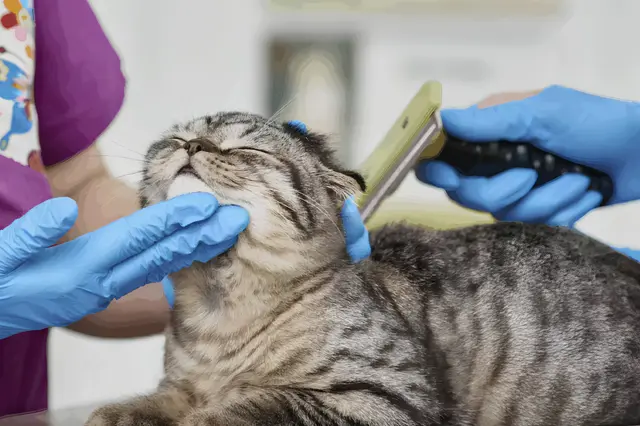
I found a clinic offering this for $280. No surgery risk. I felt like a good cat mom, until I read what vets actually say about it.
Without being put to sleep, the cleaner can only reach the top of the tooth. Worse, scraping can break the bacteria layer apart and push it into the blood without fully removing it. Maple came home scared and didn't eat. The $280 only cleaned six teeth on the outside. The infection hurting her kidneys: not touched at all.
Cosmetic results only. For a senior cat, the stress from the cleaning may cause more harm than it fixes.
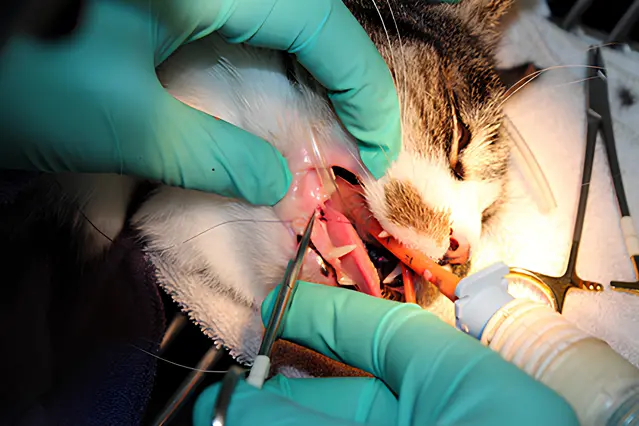
The full estimate came to just under $4,200. I sat in my car for twenty minutes before I could drive home.
| Procedure | Est. Cost | Risk |
|---|---|---|
| Senior blood panel | $300–$600 | Doesn't guarantee surgery is safe |
| Heart ultrasound | $500–$800 | Silent heart problems common in seniors |
| Dental surgery + extractions | $1,200–$2,500 | High risk with kidney or heart disease |
| Post-op ICU (if crash) | $1,000–$7,000+ | Needed if cat goes into distress |
But the number wasn't the worst part. I found a post online at midnight: a woman took her 15-year-old cat in for a "routine cleaning." Her cat never came home.
"Age is not a disease, but death is a permanent side effect of the vet's 'routine' surgery."
Older cats with kidney or heart problems have a much harder time with anesthesia. And surgery only cleans what the vet can see. The infection underneath stays, still hurting her kidneys.
Great for young, healthy cats. For an older cat with health problems, it's a $2,000–$4,000+ gamble that may not even fix the full problem.
Every option treated the smell.
None fixed what was causing it.
Why is the infection so hard to reach in the first place? When I finally found the answer, it explained why $3,400 had changed nothing inside Maple's mouth.
Bacteria in a cat's mouth don't start as hard tartar. They start as a soft, living layer that's 90% water. Brushing only touches the surface for 30 seconds a day. Everything underneath: untouched.
Most water additives don't work for cats because of something called the Jacobson's organ, a special part of a cat's nose that can detect even tiny amounts of chemicals in water that humans can't smell at all. Most additives have scents or preservatives that cats pick up as a warning signal, so they stop drinking. For a cat with kidney disease, refusing to drink water is an emergency.
What was needed was something with no smell at all, but that still fights bacteria all day long. After nine months, I found it.
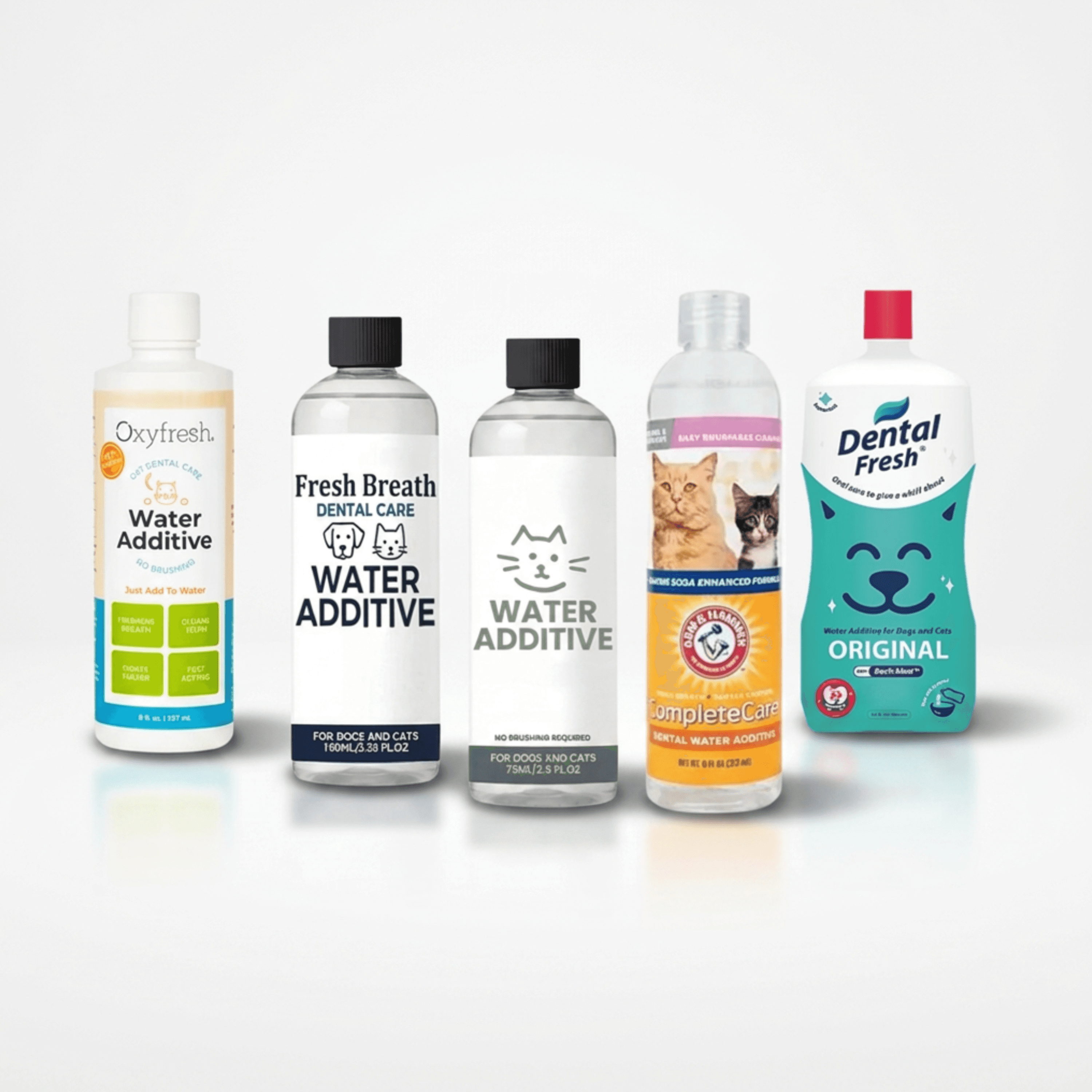
After nine months and $3,400, one approach worked. It wasn't the most marketed or the most expensive. It was the only one that fights bacteria the way bacteria actually work: every sip, all day, with zero stress on your cat.
Brushing works for 30 seconds, if your cat even allows it. Treats clean the visible surface while missing the 60% of disease hiding under the gumline. "Anesthesia-free" cleaning is mostly cosmetic. Surgery works, but the anesthesia risk for older cats is very real. None of these approaches run 24 hours a day.
A dental water additive goes into the water bowl. Every sip your cat takes after that fights bacteria. All day, every day. The effect compounds over weeks, which is why the results look so different from anything else on this list.
Most additives on the market were built for dogs. The cat versions are usually the same formula with a different label. The problem is that cats have a chemical detection system called the Jacobson's organ that picks up scents in water at levels humans can't perceive. An additive with even a faint preservative will cause many cats to stop drinking. For a cat with kidney disease, not drinking is an emergency.
A few things separate a good additive from a useless one:
- Zero detectable scent or taste. If your cat smells anything different in the water, she won't drink it. This is the single most common reason cat dental additives fail.
- Enzyme-based formula. The best additives use enzymes already found in your cat's own saliva. They support what your cat's body already does rather than disrupting it.
- Made specifically for cats. Cats have different oral bacteria, a different mouth pH, and far more chemical sensitivity than dogs. A formula built for a Labrador won't account for any of that.
- Safe for cats with health conditions. No alcohol, no synthetic preservatives. If your cat has kidney disease or a heart condition, the formula needs to be clean. Additives processed by the kidneys add burden you don't want.
- Truly passive. It goes in the water bowl and your cat does nothing. If administering it requires any handling or effort from either of you, it will eventually stop happening.
Every cat is different.
The right additive depends on yours.
There's no single "best" answer because there's no single cat. Age, health conditions, how sensitive she is to taste and smell, how far along the dental disease already is. All of it matters. The wrong choice doesn't just waste money. It can set things back.
Age and health tend to matter more than most people expect:
The quiz below takes about 60 seconds. It asks about your cat's age, health, and what you've already tried, then gives you a specific recommendation.
Answer 3 quick questions about your cat and we'll show you exactly what to do.
I'm a feline-focused veterinarian and I've started sharing this quiz with clients at the beginning of appointments, specifically for cats with dental disease who aren't surgical candidates. It asks exactly the right questions: age, health conditions, whether the cat has ever refused water with something added. In under two minutes it gives owners a framework that would otherwise take a 20-minute consult to build. I send the link to clients who leave the appointment without a clear next step.
Just took the quiz and got my result in under a minute. It asked about my cat's age, whether she had health conditions, and whether she'd ever refused water before. The recommendation made total sense. She's 13 with early kidney disease and I wouldn't have known what to rule out on my own.
We paid $280 for the no-sleep cleaning. Cat came home scared and her breath was exactly the same the next day. Now I understand why. It only cleaned the outside. Took the quiz after reading this and the part about health conditions matched our situation exactly. Purrherb is on its way.
My husband kept saying "it's just a cleaning." I sent him this article and then made him take the quiz with me. When it got to the health conditions question he finally understood why surgery wasn't the answer. He said "okay, we're not doing it." Thank you.
My 17-year-old Duchess has been getting "the talk" at every vet visit for three years. I cried at the part about Maple pushing her face into your neck. That's exactly what I want back. Ordered today.
We tried a different brand first. Our cat sniffed the water and refused to drink for 36 hours. The quiz actually asked about this specifically, asking whether she had ever rejected water with something added. I had no idea that was a known issue. Switching now.
Load 2 more comments
Took the quiz first thing this morning. It went straight to the kidney disease question for my 12-year-old and the recommendation matched everything in this article. Glad I caught this before booking another cleaning that would have done the same thing.
My vet mentioned dental water additives at our last visit but couldn't point me to a specific one. Took this quiz and now I have an actual recommendation to bring back to her. The questions were way more specific to my cat's situation than I expected.
© 2026 Senior Cat Digest. All Rights Reserved. · Privacy · Disclaimer · Terms · Contact